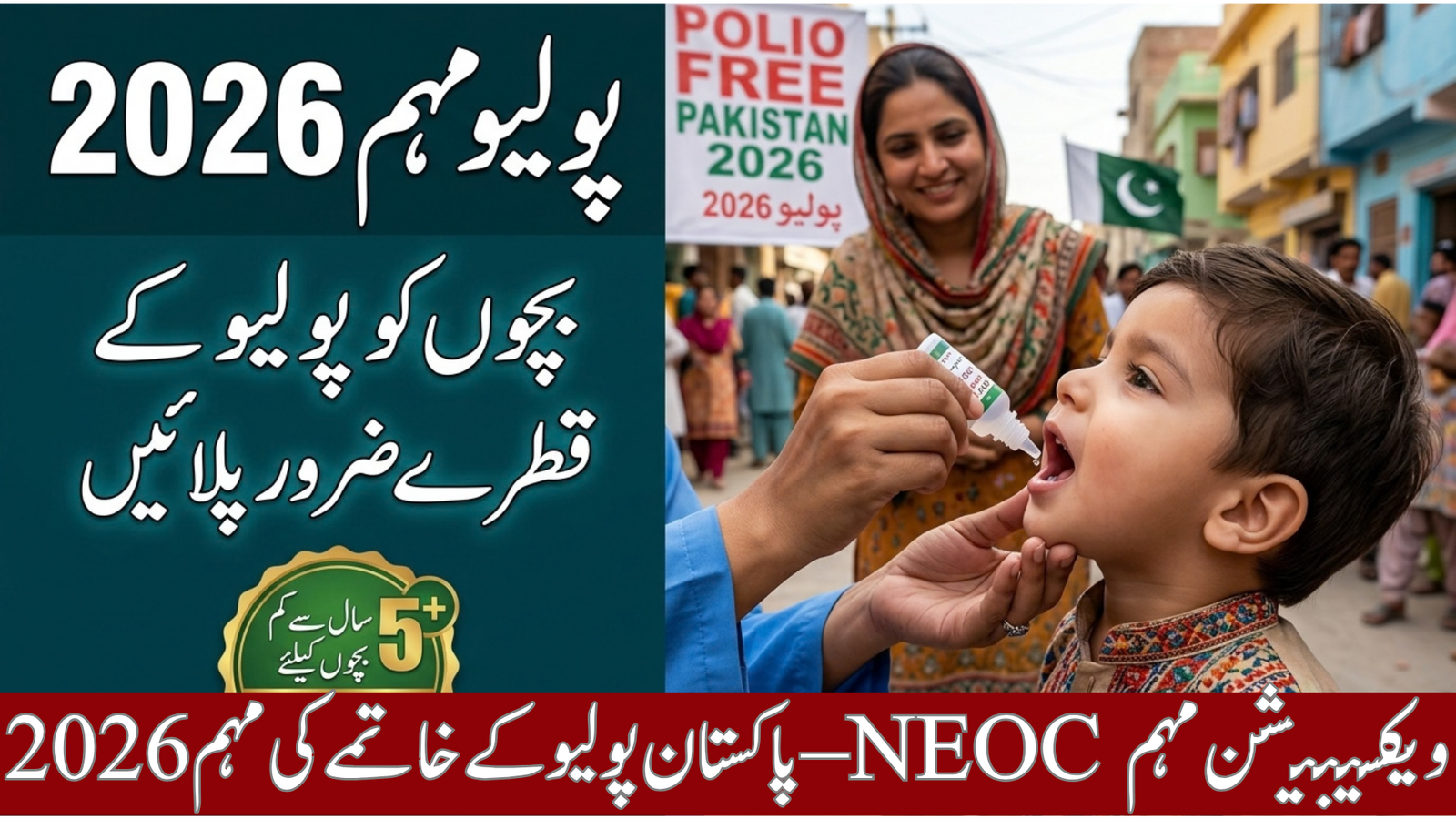
Pakistan Polio Eradication Campaign 2026: Progress, Challenges, and What Parents Need to Know
Pakistan’s fight against polio is one of the longest-running and most consequential public health efforts in the country’s history. Despite decades of vaccination drives, Pakistan remains one of only two countries in the world — alongside Afghanistan — where wild poliovirus transmission has never been fully interrupted. The National Emergency Operations Centre for Polio Eradication (NEOC), working under the government-led Polio Eradication Initiative, continues to lead a nationwide campaign of vaccination, surveillance, and community engagement aimed at finally ending this preventable, paralyzing disease. This article breaks down the current state of the Pakistan polio eradication campaign in 2026, how the vaccination drives work, and why continued vigilance remains critical.
What Is Polio and Why Does It Still Matter?
Poliomyelitis, commonly known as polio, is a highly infectious viral disease that primarily affects children under the age of five. It spreads through contaminated water or food and can invade the nervous system, causing irreversible paralysis within hours in severe cases. There is no cure for polio — the only effective protection is through repeated doses of the oral polio vaccine (OPV), combined with completion of routine immunization schedules recommended by Pakistan’s Expanded Programme on Immunization (EPI). Public awareness of these facts strengthens the Pakistan polio eradication campaign.
Read Also:Pakistan Bait-ul-Mal (PBM) – Programs, Eligibility & How to Apply 2026
Because even a single unvaccinated child can allow the virus to continue circulating within a community, achieving eradication requires near-universal vaccination coverage across every province, district, and union council — a logistical challenge that the Pakistan polio eradication campaign’s frontline health workers face during every campaign cycle.
Pakistan’s Progress: A 99.8% Reduction Since the 1990s
Despite ongoing challenges, the Pakistan polio eradication campaign has achieved substantial long-term progress against polio. According to NEOC, the country has reduced polio cases by 99.8 percent since the early 1990s, when an estimated 20,000 cases were recorded annually. By comparison, Pakistan reported 73 cases in 2024, followed by a further decline to 31 cases in 2025, and as of the most recent NEOC update, only a handful of cases had been confirmed so far in 2026.
Environmental surveillance data has also shown encouraging trends. NEOC reported that the proportion of environmental samples testing positive for poliovirus dropped sharply to 13.1 percent in the first half of 2026, down from 48.1 percent during the same period the previous year — a signal that sustained vaccination and surveillance efforts are helping to interrupt virus transmission in most parts of the country.
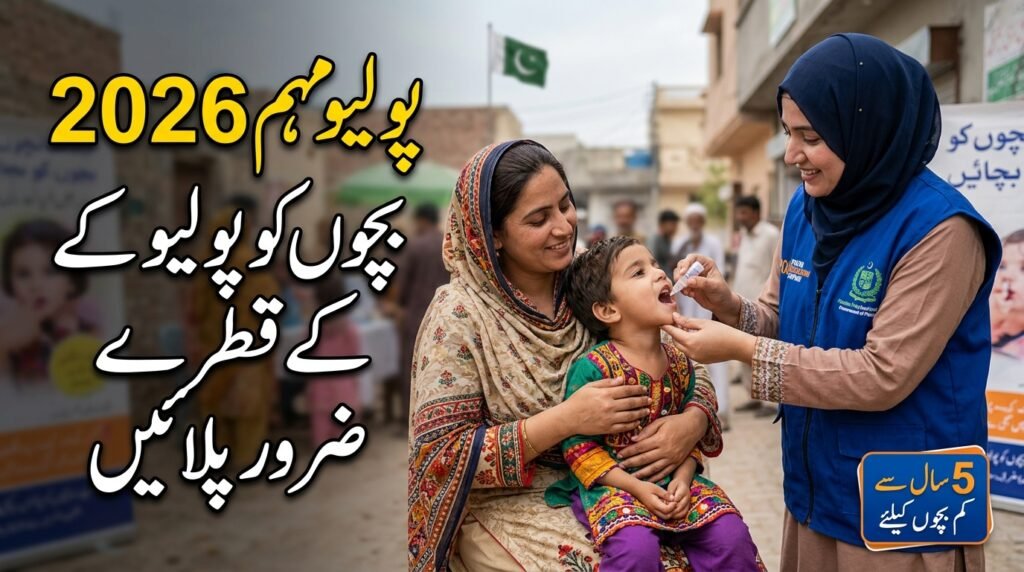
2026 Polio Cases: Where the Virus Persists
While the Pakistan polio eradication campaign has improved national trends, transmission has remained persistent in specific high-risk areas, particularly parts of Khyber Pakhtunkhwa (KP), especially Bannu district and Bannu division. Several of the polio cases confirmed in 2026 have originated from this region, where NEOC has cited security-related access constraints as a key factor preventing vaccination teams from consistently reaching children. In areas like Nurar Union Council in Miryan tehsil, health officials noted that some children had missed vaccination since 2025 due to these access challenges, allowing the virus to continue circulating locally.
The Pakistan polio eradication campaign has also recorded cases in parts of Sindh, including Sujawal district, underscoring that while KP remains the primary hotspot, the risk of transmission is not confined to a single province.
How the Vaccination Campaigns Work
The Pakistan polio eradication campaign relies on large-scale, coordinated door-to-door vaccination campaigns, typically conducted multiple times per year. In each round, trained vaccination teams visit households directly to administer oral polio drops to every child under the age of five, regardless of prior vaccination history, since repeated doses are necessary to build strong community immunity.
In 2026, the Pakistan polio eradication campaign conducted its first nationwide campaign of the year starting February 2, targeting over 45 million children across the country. This was followed by additional campaigns throughout the year, including a second nationwide round in April that similarly protected around 44.8 million children. By September 2026, NEOC confirmed that three large-scale national campaigns had already been completed for the year, alongside smaller, targeted campaigns in high-risk districts using both oral and injectable vaccines.
A further nationwide campaign was scheduled for September 21–27, 2026, aiming to vaccinate close to 31 million children, with particular focus on southern KP districts where transmission has remained active.
Why Some Areas Remain Under-Vaccinated
Several recurring challenges continue to affect full vaccination coverage in parts of Pakistan:
- Security concerns in specific districts that limit the ability of vaccination teams to safely conduct door-to-door visits
- Vaccine hesitancy and misinformation, which can lead some families to refuse vaccination for their children
- Population movement, including families relocating between high-risk and low-risk areas, which can complicate tracking and follow-up doses
- Natural disasters and logistical disruptions, which have periodically delayed or interrupted planned campaigns in previous years
The Pakistan polio eradication campaign, led by NEOC and its partners — including provincial health departments, religious leaders, and community mobilizers — has placed growing emphasis on community engagement to address hesitancy and build public trust in the vaccination process.
International Support for Pakistan’s Polio Program
The Pakistan polio eradication campaign continues to receive international backing, reflecting its significance as part of the Global Polio Eradication Initiative. For example, Japan announced a $3.5 million grant in late 2025 to support Pakistan’s polio program, part of a broader pattern of international donor support aimed at helping Pakistan cross the finish line toward eradication. Pakistan’s Prime Minister’s Focal Person on Polio has also received international recognition, having been named a Gender Champion by the Global Polio Eradication Initiative, reflecting the program’s emphasis on empowering female frontline health workers who make up a significant portion of Pakistan’s vaccination workforce.
What Parents and Caregivers Should Do
To support the Pakistan polio eradication campaign, health authorities continue to stress that consistent, repeated vaccination is the only way to protect children from lifelong paralysis caused by polio. Parents and caregivers are advised to:
- Ensure every child under five receives oral polio drops during every campaign round, even if the child was vaccinated in a previous round
- Complete the full routine immunization schedule as recommended under Pakistan’s EPI program, not just campaign-specific doses
- Welcome vaccination teams during door-to-door visits and verify their identification if uncertain
- Avoid relying on misinformation from unofficial sources regarding vaccine safety, and instead consult local health workers or official government channels
Official Website Link
For official updates on the Pakistan polio eradication campaign, visit:
https://www.poliofreepakistan.gov.pk
Why Full Eradication Still Matters
As long as wild poliovirus continues to circulate anywhere in Pakistan — even in a small number of districts — the risk of wider resurgence remains real, both domestically and for neighboring regions. Global eradication efforts depend on the Pakistan polio eradication campaign (alongside Afghanistan) fully interrupting transmission, since polio can quickly spread across borders if vaccination coverage drops in any part of the world. This is why NEOC continues to emphasize that eradication is a “collective responsibility,” requiring sustained cooperation between government health teams, frontline workers, and every parent ensuring their child receives every recommended dose.
Conclusion
The Pakistan polio eradication campaign in 2026 reflects both significant long-term progress and the persistent, localized challenges that remain — particularly in parts of Khyber Pakhtunkhwa affected by access and security constraints. With case numbers down sharply from historical highs and environmental surveillance showing declining virus positivity, the country appears closer than ever to full eradication. However, achieving that final goal will depend on continued, consistent vaccination coverage in every district, without exception. Parents and caregivers remain the frontline partners in this effort, and their continued cooperation with vaccination teams during each campaign round is essential to finally ending polio in Pakistan.
Disclaimer
This article is for general informational purposes only, based on publicly available NEOC updates and news reports at the time of writing. Polio case counts, campaign schedules, and program details are updated frequently. Readers should refer to the official NEOC website (poliofreepakistan.gov.pk) for the most current case data, campaign dates, and health guidance, and should consult a qualified healthcare provider for any medical concerns.
1 thought on “Pakistan Polio Eradication Campaign 2026 – NEOC Vaccination Drive Guide”