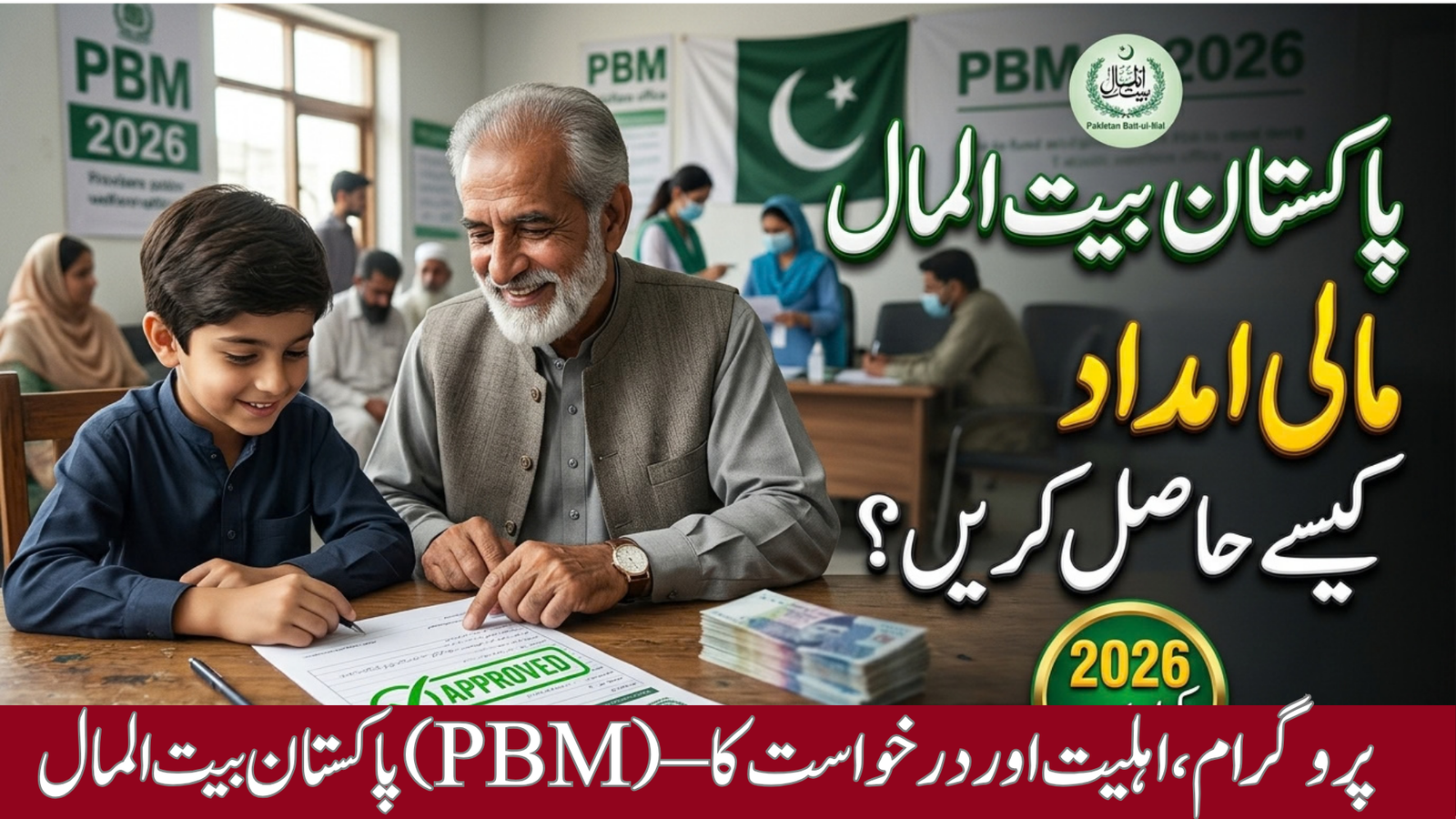
Pakistan Bait-ul-Mal (PBM): A Complete Guide to Pakistan’s Social Welfare Institution
Pakistan Bait-ul-Mal (PBM) is one of the oldest and most trusted public sector social welfare institutions in Pakistan, established with the core mission of providing financial assistance and social support to the country’s most vulnerable citizens — including widows, orphans, persons with disabilities, and families living below the poverty line. Operating under the federal government and financed through the Central Zakat Fund as well as direct federal budget allocations, PBM has played a foundational role in Pakistan’s social safety net long before newer programs like BISP and Ehsaas were introduced. This article explains what Pakistan Bait-ul-Mal is, the programs it runs, who is eligible, and how citizens can apply for assistance.
What Is Pakistan Bait-ul-Mal?
The name “Bait-ul-Mal” translates to “House of Wealth” or “Treasury,” a concept rooted in early Islamic governance where a central fund was maintained to support the poor and needy members of society. In modern Pakistan, this concept was institutionalized through the establishment of Pakistan Bait-ul-Mal, a statutory body tasked with channeling government and Zakat resources toward direct welfare support for destitute individuals and families across the country.
Unlike programs that focus solely on cash transfers, PBM operates a broader mandate covering financial assistance, educational support, vocational training, rehabilitation of people with disabilities, and institutional care for orphans — making it a multi-dimensional welfare organization rather than a single-purpose cash assistance scheme.
Read Also:NADRA CNIC Check 8171 – BISP Registration & Eligibility Guide 2026
Core Programs Run by Pakistan Bait-ul-Mal
Over the years, PBM has developed and operated several distinct programs, each targeting a specific vulnerable group:
1. Individual Financial Assistance (IFA)
This is one of PBM’s flagship programs, providing one-time or periodic financial assistance to deserving individuals and families facing acute economic hardship — such as medical emergencies, loss of a breadwinner, or extreme poverty. Applicants typically need to demonstrate financial need through documentation and a verification process conducted by PBM’s regional offices.
2. Child Support Program (CSP)
This program is designed to prevent child labor by providing a stipend to families who enroll their children in school instead of sending them to work. It targets economically vulnerable households where children might otherwise be forced into premature employment.
3. Sweet Homes (Orphanages and Shelter Homes)
PBM operates residential care facilities known as “Sweet Homes” across various cities, providing orphaned and abandoned children with shelter, education, healthcare, and vocational training until they are capable of independent living.
4. Women Empowerment Centers
These centers provide vocational training to underprivileged women, equipping them with income-generating skills such as tailoring, embroidery, and handicrafts, helping them become financially self-reliant.
5. Assistance for Persons with Disabilities
PBM has run specific initiatives to support people with disabilities, including financial aid, assistive devices, and rehabilitation support, in line with the organization’s broader social inclusion mandate.
6. National Centre for Rehabilitation of Child Labour (NCRCL)
This specialized program focuses on rescuing and rehabilitating child laborers, providing them with education and vocational training as an alternative to hazardous work environments.
7. Paid Internship Program
In recent years, PBM has also launched a Paid Internship Program aimed at fresh graduates, offering practical exposure to public sector welfare operations along with a competitive monthly stipend — reported at up to Rs. 60,000 per month in the most recent cycle. This program is typically a 6-month engagement, extendable based on performance, and open to candidates with at least 16 years of education (BS/Master’s), a minimum CGPA of 3.0 or 70% marks, and an age limit of up to 35 years.

Funding Sources of Pakistan Bait-ul-Mal
PBM’s operations are financed through two primary sources:
- The Central Zakat Fund, which is collected from Zakat deductions under Pakistan’s Islamic finance framework
- Direct allocations from the federal government budget, approved annually as part of the country’s social welfare expenditure
This dual funding structure allows PBM to operate independently of some of the donor-dependent funding models used by other welfare organizations, though it remains subject to the same budgetary constraints as other federal institutions.
Who Is Eligible for PBM Assistance?
Eligibility for PBM’s welfare programs generally depends on the specific scheme, but common criteria across most programs include:
- Pakistani nationality with a valid CNIC
- Demonstrated financial hardship or poverty-level income
- Priority categories: widows, orphans, persons with disabilities, and families with no other means of financial support
- For education-linked programs (like the Child Support Program), enrollment of children in a recognized school is often mandatory
Applicants are usually required to provide supporting documents such as CNIC copies, income certificates, medical reports (where applicable), and proof of the specific hardship being claimed.
How to Apply for Pakistan Bait-ul-Mal Assistance
The application process for most PBM programs follows a similar structure:
- Visit the nearest PBM regional or district office, as many of PBM’s welfare programs still require in-person verification rather than fully online applications
- Collect and submit the required application form, along with supporting documents (CNIC, income proof, medical or educational documents depending on the program)
- Undergo a verification process, where PBM field staff assess the applicant’s household situation
- Await approval and disbursement, which varies in timeline depending on the specific program and regional office workload
For programs like the Paid Internship Program, however, the process is largely online — candidates apply directly through the official PBM website, submit their CV, educational documents, and CNIC, and go through a merit-based selection process, often followed by an interview at PBM’s Islamabad office.
PBM vs. BISP and Ehsaas: What’s the Difference?
A common point of confusion is how PBM differs from more widely known programs like the Benazir Income Support Programme (BISP) or the Ehsaas Program. While BISP primarily focuses on regular, means-tested cash transfers to registered low-income households based on a Proxy Means Test (PMT) score, PBM operates more as a case-by-case, multi-service welfare institution, covering everything from emergency financial aid to orphan care, vocational training, and child labor rehabilitation. In practice, many families may be connected to both institutions simultaneously, as they address different dimensions of poverty and vulnerability.
Why Pakistan Bait-ul-Mal Remains Relevant
Despite the emergence of newer, tech-driven welfare programs, PBM continues to play a critical role because of its institutional infrastructure — including physical shelter homes, rehabilitation centers, and a nationwide network of regional offices — that allows it to deliver services that purely cash-based programs cannot replicate. Orphan care, disability rehabilitation, and child labor prevention require sustained institutional support rather than one-time or periodic cash transfers, and this is where PBM’s decades of operational experience continue to add value to Pakistan’s broader social protection framework.
Official Website Link
Conclusion
Pakistan Bait-ul-Mal remains a cornerstone of the country’s social welfare architecture, offering a wide range of services that go beyond simple cash assistance to include education, rehabilitation, shelter, and skills training for the country’s most vulnerable populations. Whether you are seeking financial assistance for a family in hardship, looking to enroll a child under the Child Support Program, or applying for the organization’s paid internship opportunities, the process typically begins with a visit to the official PBM website or the nearest regional office. As with any government welfare program, applicants are encouraged to rely only on official channels to avoid scams and ensure accurate, up-to-date information.
Disclaimer
This article is for general informational purposes only, based on publicly available information about Pakistan Bait-ul-Mal at the time of writing. Program details, eligibility criteria, and application procedures may change without notice. Readers should verify current information directly through the official PBM website (www.pbm.gov.pk) or their nearest PBM regional office before applying for any program.
1 thought on “Pakistan Bait-ul-Mal (PBM) – Programs, Eligibility & How to Apply 2026”